

Built for the world ahead.
Why two entrepreneurs created Gallop for their daughter—and why knowing how to think may be the most important advantage we can give the next generation.
Some of the most meaningful ideas begin with a question you cannot stop asking.
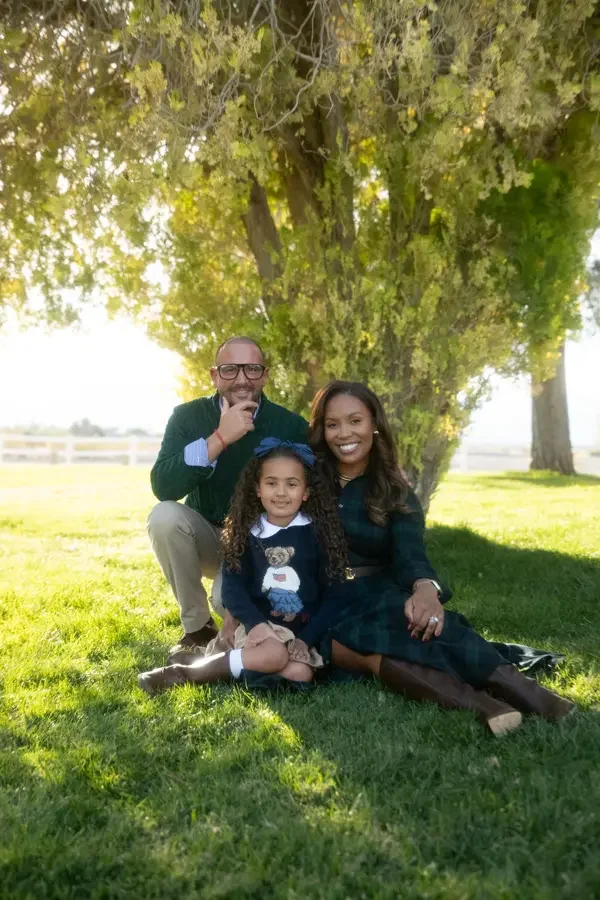
For my husband, Steve, and me, that question was simple: What will our daughter truly need to thrive in the world ahead?
Like so many parents, we care deeply about our daughter Margaux’s education. We want her to have a strong academic foundation. We want her to feel confident in school, to be challenged and to understand the material in front of her.
But our lives as entrepreneurs have also taught us that knowledge alone is not enough.
In business—and in life—no one hands you a page with every fact you need and one correct answer waiting at the bottom. You have to evaluate incomplete information. You have to ask better questions, make decisions, recover when something does not work and understand how one choice affects everything that follows.
The future will not belong only to the children who know the answers. It will belong to those who know how to think.
That belief became the foundation of Gallop.
Gallop began at our kitchen table, with Margaux at the center of the conversation. Steve and I were not trying to enter education because it was simply another industry to explore. We were trying to create the learning experience we wanted for our own child.
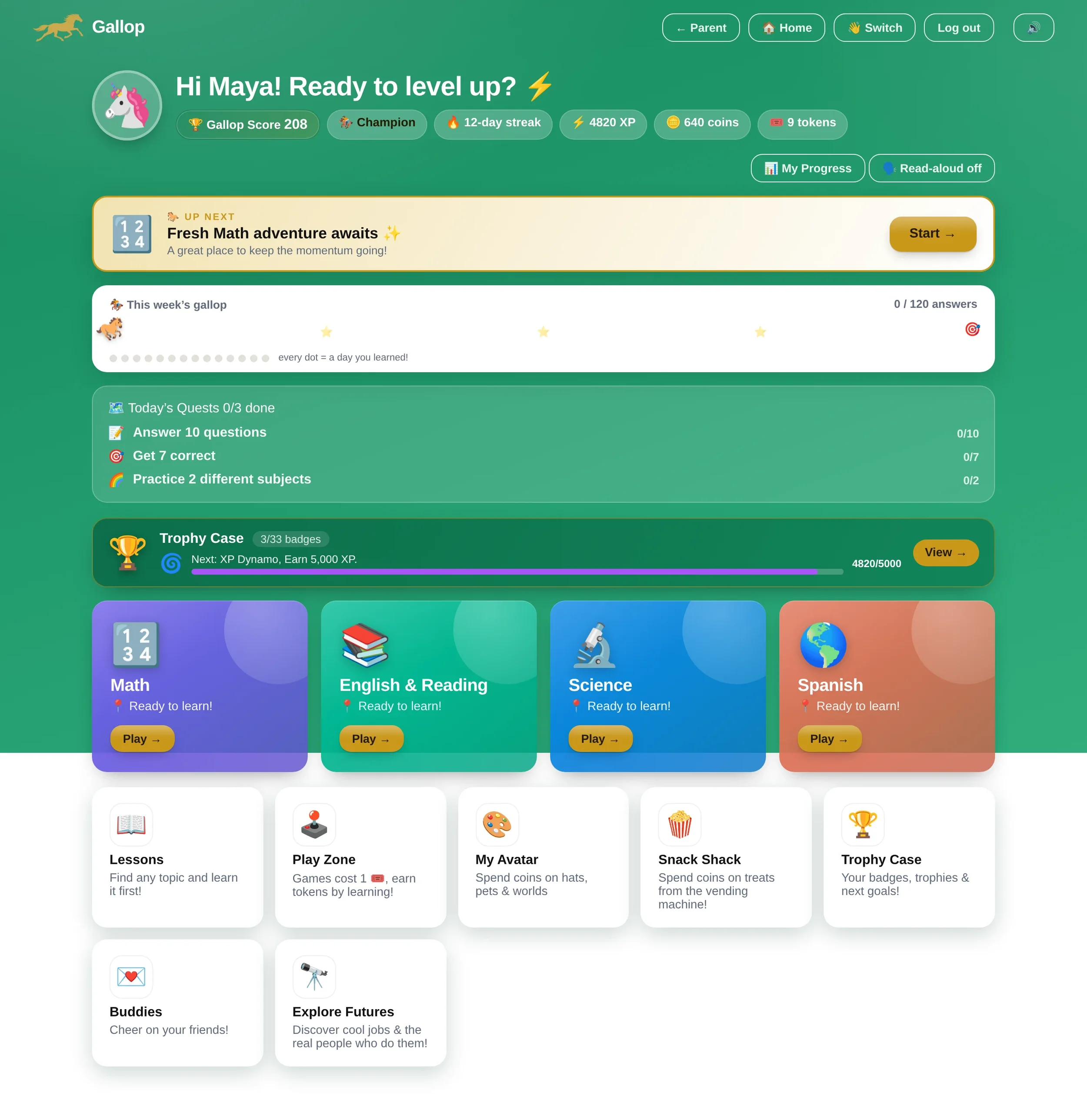
We wanted rigor, but we also wanted relevance. We wanted a platform that could meet a child at their actual level in core academic subjects and then go further—helping that child reason, decide and apply what they know.
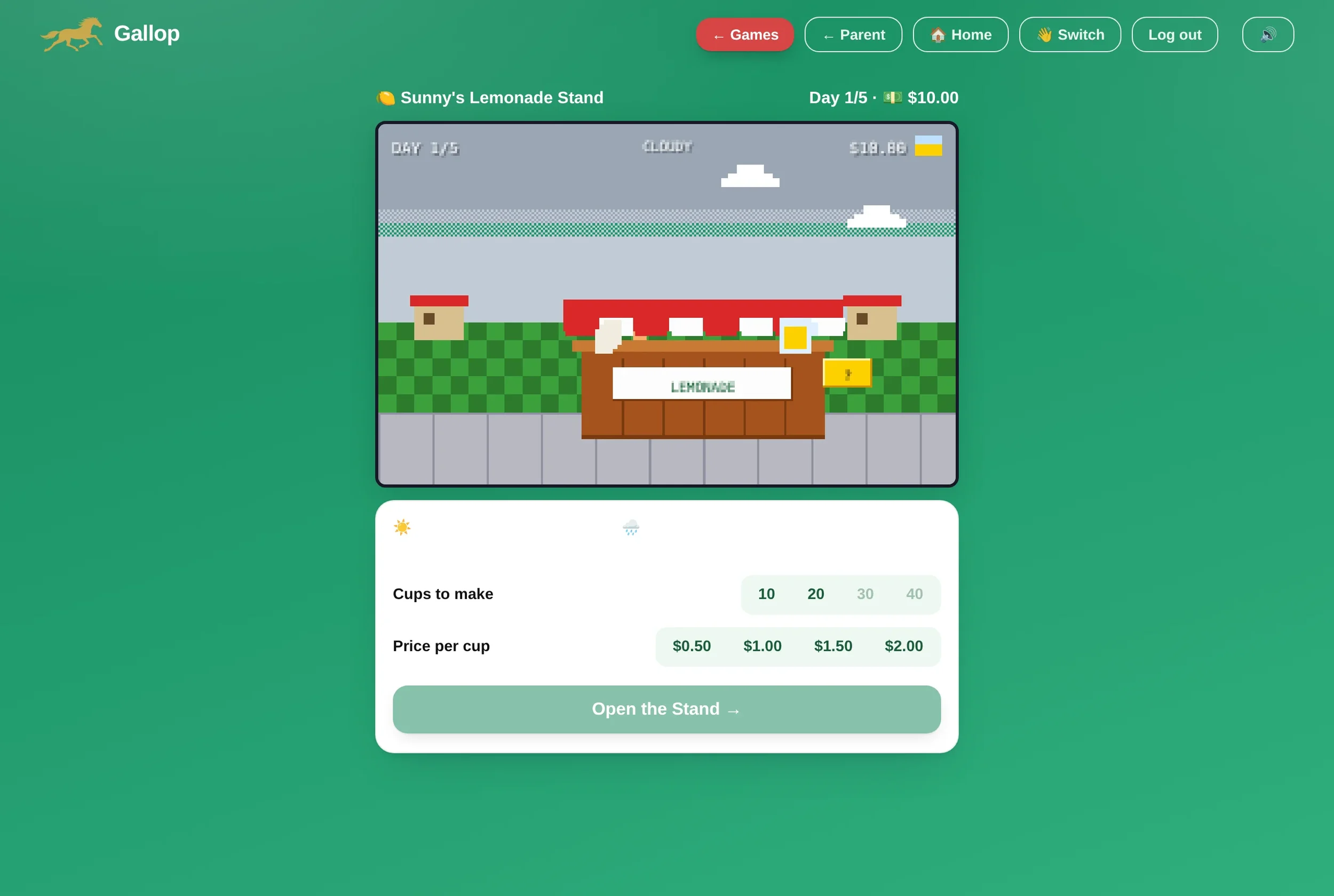
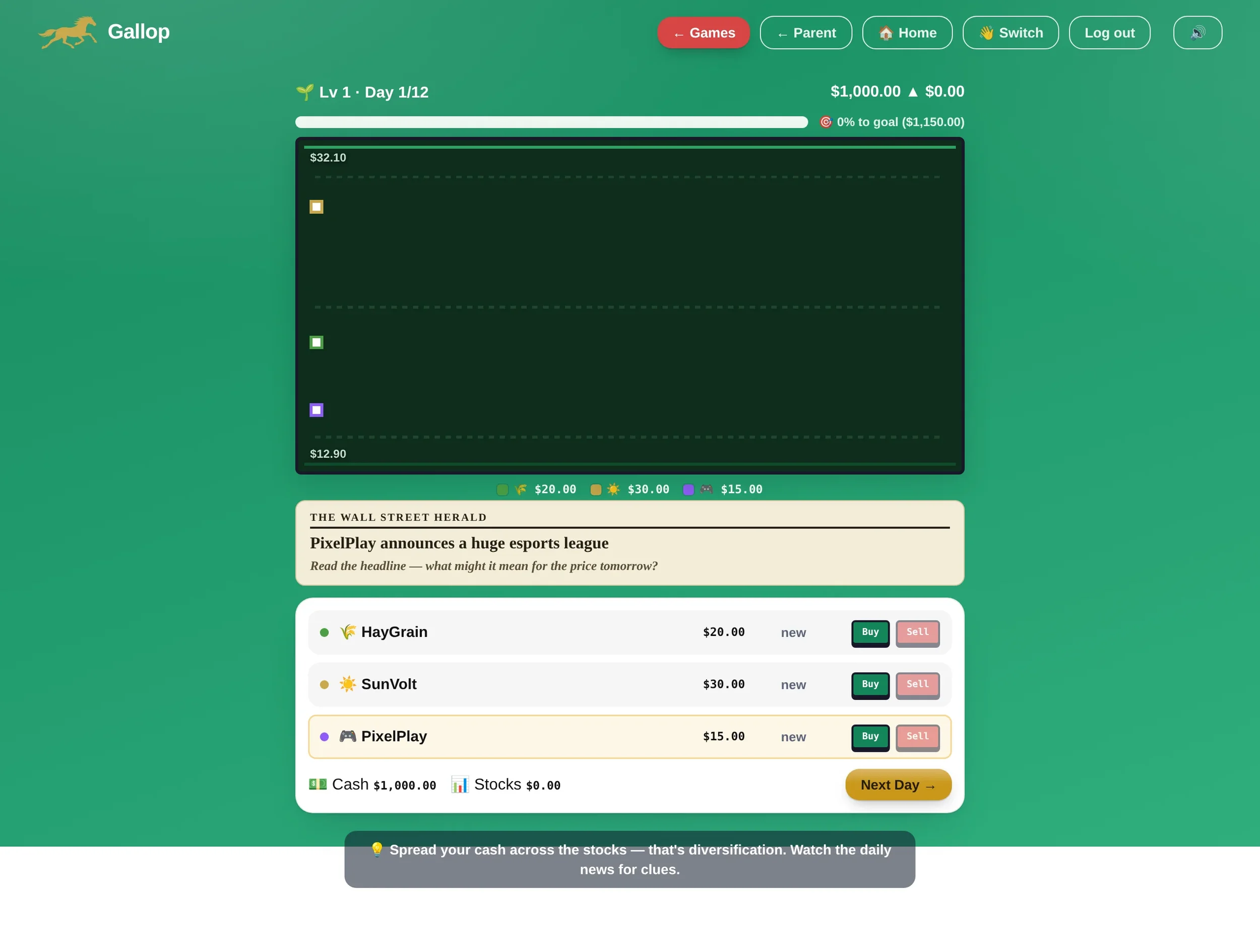
That meant building experiences around entrepreneurship, investing, money and careers. It meant showing children that math is not limited to a worksheet; it helps you price a product, manage inventory and determine whether a business is profitable. It meant allowing them to weigh risk, make a choice and see the result.
In Gallop, a child can run a lemonade stand or bakery, explore investing and practice the kinds of decisions adults make every day. These experiences may feel like play, but the thinking behind them is real.
That distinction matters to me.
We often tell children to dream big, but we do not always give them a place to practice turning an idea into action. We encourage confidence, but confidence grows through experience: making a decision, seeing what happens and discovering that a disappointing result is information—not a reason to stop trying.
Entrepreneurship is not only about starting a company. It is a way of approaching a problem.
It teaches you to notice what is missing, imagine a solution and take responsibility for bringing that solution to life. It requires creativity, but also patience. It requires courage, but also judgment. It asks you to believe in your idea while remaining willing to learn and adjust.
Those are business skills. They are also life skills.
I know this because I have lived the distance between a beautiful idea and the work required to make it real.
My career began with a background in law, but my work eventually expanded into hospitality, brand building, design, storytelling and operations. As a co-founder of Refined Restaurant Group, I helped shape concepts from their earliest vision through the countless decisions that made them tangible.
That work taught me to see the complete world around an idea. A brand can begin with imagination, but it only becomes meaningful when vision and execution are held to the same standard.
Gallop is a different expression of that same instinct.
I saw something I wanted for our daughter that did not yet exist in the way I imagined it. Steve had the technical and operational ability to begin developing the platform. Together, we brought different strengths to the same purpose.
Steve developed Gallop and now leads its day-to-day growth. I shape the vision, brand and parent experience. Our roles are distinct, but the belief beneath them is shared: children deserve an education that prepares them not only to perform in school, but to participate confidently in the real world.
Building something with your husband—and for your daughter—is deeply personal. The conversations do not end when the workday does. The product is not theoretical. We experience it as founders, but we also experience it as parents.
That proximity keeps us honest.
We think about whether the experience is engaging because we can see when a child is engaged. We think about whether the progress is meaningful because we understand what parents are trying to measure. We think about the future because, like every parent, we know that the world our child will enter will be different from the one that prepared us.
We are not trying to predict every job our children may have. We are helping them develop the judgment to meet opportunities that do not exist yet.
That is why critical thinking sits at the center of Gallop.
A child who knows how to think can adapt. A child who is comfortable asking questions can learn. A child who understands that mistakes are part of the process is more willing to attempt something difficult. And a child who can connect an academic concept to a real decision begins to understand the power of what they are learning.
For years, much of my work happened behind the scenes. I was often most focused on the idea itself—the brand, the experience, the operations and the details required to hold it all together. I did not always feel the need to stand at the center of the story.
There is value in doing the work quietly. But there also comes a time when sharing what you have learned becomes part of the work.
This chapter is about using my voice more intentionally. It is about speaking honestly about what it takes to create, operate, evolve and begin again. It is also about widening the conversation beyond a single industry.
I have learned that the principles behind a memorable hospitality brand, a growing business and a meaningful learning experience are not as different as they first appear. Each begins by paying attention. Each asks you to understand the person you are serving. Each requires a clear vision, disciplined execution and the humility to keep refining.
What we build reveals what we believe is possible.
With Gallop, Steve and I believe children are capable of more than repeating what they have been told. We believe they can reason, create, evaluate and lead. We believe parents want more than another screen or another set of exercises. They want to know their children are becoming thoughtful, capable people.
Gallop began with Margaux, but our hope is much larger than our own family.
We want to give children a place to practice thinking for themselves—and to give parents a clearer way to help prepare them for a changing world.
Because the goal is not simply to help a child get through the next assignment.
It is to help that child become ready for whatever comes next.